
Three Oklahoma County Release Clocks
Three clocks are often compressed into one “release date,” even though each answers a different question. The first is OCDC physical-release processing. It starts after staff receive legal authority and clear holds, then ends when the person actually exits or transfers. The time on a court order may precede the jail exit because identification, detainer review, property return, and administrative work still must occur.
The second is an ODOC projected or tentative discharge computation for a state sentence. It can account for sentence structure, jail credit, earned and achievement credits, misconduct changes, and a statutory floor. The third is parole eligibility or the Board docket clock. Eligibility permits consideration. It does not promise parole or establish a gate date.
| Clock | What it measures | Best source |
|---|---|---|
| OCDC processing | Time from valid authority and hold clearance to exit or transfer | OCDC release record |
| ODOC computation | A moving sentence endpoint under credits and legal limits | ODOC record and authorized records staff |
| Parole eligibility | When consideration may occur | Parole Board docket and governing law |
| Maximum sentence end | The legal end of the imposed term | Judgment and administering agency |
Match the Oklahoma County Custodian
Oklahoma City contains county, state, and federal custody sites. The physical address alone does not identify which date system applies. OCDC holds county detainees and inmates. Clara Waters Community Corrections Center is an ODOC state facility. Federal Transfer Center Oklahoma City belongs to the Bureau of Prisons and mainly handles federal transfers. A person who vanishes from one roster may have moved to another system rather than returned to the community.
Start with the arresting agency, booking number, court case, DOC number, or BOP register number. The OCDC current inmate search only describes current inmates in custody. A missing name does not supply a release date. For a past Oklahoma County booking, the jail release sheet is the better source. For state custody, ODOC owns the computation. For federal custody, use BOP records.
- Projected date
- A current administrative estimate based on data and rules that may change.
- Parole eligibility
- The point when parole consideration may occur, not the day release must happen.
- Discharge date
- A date tied to completion or termination of the represented sentence obligation.
- Detainer
- A request or legal hold from another authority that can prevent community release.
Find an Oklahoma County Release Date
The search path changes after custody type is known. A pretrial OCDC detainee has no sentence endpoint to calculate. Read the court docket for bond, recognizance, pretrial authorization, dismissal, or later commitment, then confirm physical exit with the jail. A person serving a county term needs the judgment, jail-credit notation, and OCDC calculation or release sheet. A state prisoner needs the individual ODOC record and every sentence count.
- Confirm whether the person is in OCDC, ODOC, federal custody, another county, or no longer in custody.
- Save the booking, court, DOC, or register number so the date remains tied to the right person.
- For OCDC, compare the Oklahoma County court order with the jail’s actual release or transfer record.
- For ODOC, open the person result and copy any projected, tentative, parole, or discharge label exactly as displayed.
- Review all sentence counts, then confirm a later release through the agency that performed it.
The Oklahoma County release-record search explains the full route after a person leaves the current roster. Do not calculate a date by adding a sentence length to an arrest date. Sentence commencement, credited custody, amendments, concurrent or consecutive counts, and holds can all defeat that shortcut.
Note: A court order explains legal authority, while the jail or prison record confirms the later custody event and actual exit.
ODOC Release-Date Confidentiality
ODOC’s official FAQ provides a key limit. It says an inmate’s exact release date is confidential unless the requester has a qualifying need. The inmate receives days remaining each month and may ask a facility correctional-records officer or case manager for help. Family members should seek information the incarcerated person is authorized to share. Victim Services and notification systems serve their own lawful purposes.
Public display can vary by person, status, and time. If a result shows “Projected Release Date,” “Tentative Release Date,” “Discharge Date,” or another phrase, preserve that exact text and note the date it was observed. Do not claim that every ODOC record exposes the same field. A past discharge date is historical evidence. A future estimate is still a computation and not a scheduled exit hour.
The ODOC offender information page publishes the official explanation used when a future date is not public.
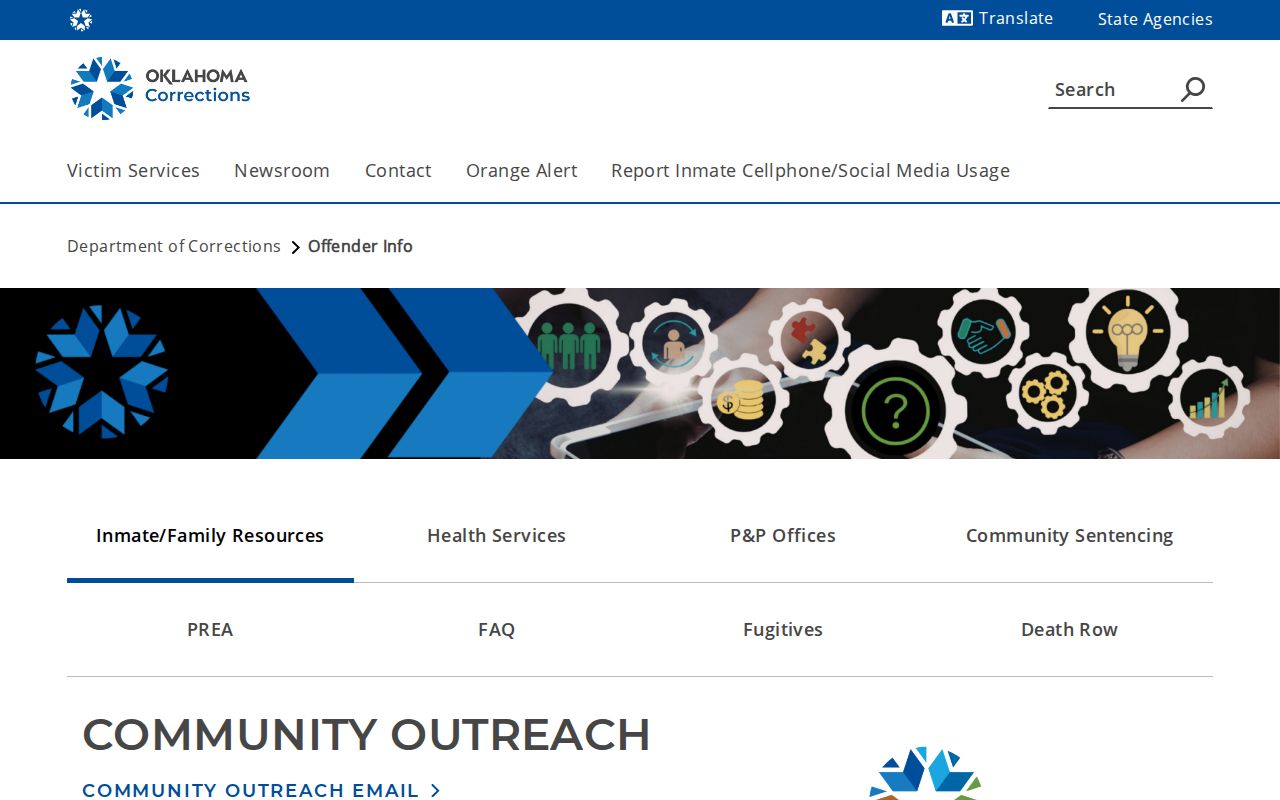
The captured ODOC guidance supports using the agency’s public label instead of reverse-engineering confidential days remaining.
Oklahoma Earned-Credit Computation
Oklahoma’s earned-credit law is 57 O.S. § 138. It uses statutory class levels and includes exclusions, adjustment rules, loss and restoration mechanisms, and additional achievement credits. An earned credit is generally a day deducted under the statute, but there is no universal daily rate for every prisoner. The correct rate depends on legal eligibility and the person’s classification history.
Jail credit and earned credit are also different. Jail credit recognizes qualifying confinement already served under the judgment and applicable law. Earned credit reflects qualifying conduct or status while a sentence is administered. The Oklahoma County docket may state jail credit. ODOC applies the full state computation. Concurrent counts run together in ways set by the judgment, while consecutive counts run one after another. Later orders can alter either structure.
No verified public OCDC county-jail good-time policy was found in the Oklahoma County research. ODOC’s class-credit system should not be imported into a county misdemeanor sentence. Obtain the judgment, jail calculation, and release sheet instead of assuming the state rule applies.
Oklahoma County 85 Percent Dates
For offenses enumerated in 21 O.S. § 13.1, Oklahoma law requires at least 85 percent of imprisonment before parole consideration and prevents credits from reducing imprisonment below that floor. The rule follows the statute of conviction. It should not be generalized to every offense described as violent, every felony, or every person held in Oklahoma County.
A ten-year example can illustrate the floor without predicting a person’s calendar date: earned credits cannot reduce imprisonment below the statutory 85 percent minimum for a covered offense. Yet the example does not resolve sentence start, credited custody, multiple counts, amended judgments, the controlling version of law, or later court action. The ODOC record remains the source for an individual computation.
Parole eligibility under 57 O.S. § 332.7 is another distinct question. Reaching eligibility permits consideration. A docket appearance or favorable result can still be followed by conditions, approvals, release-plan work, and administrative processing. None of those events should be labeled sentence discharge without the state record.
Why Oklahoma County Release Dates Change
A date changes when one of its inputs or legal constraints changes. Some factors affect only ODOC projections. Others delay physical exit from OCDC without changing a sentence endpoint. The record should say which one occurred.
| Factor | Possible effect | Where to verify |
|---|---|---|
| Earned-credit class | Changes the rate of eligible credits | ODOC computation and current statute |
| Misconduct | Can change class or cause credit loss | ODOC authorized record |
| Achievement credits | May alter an eligible projected endpoint | ODOC calculation |
| Detainer or hold | Can turn a planned community exit into transfer or continued custody | OCDC release destination and receiving agency |
| Court order | May amend sentence, credit, bond, or authority to hold | OSCN docket and signed order |
| Parole action | May create or change a conditional release path | Board result followed by ODOC status |
An Oklahoma County dismissal or bond order can still leave another hold in place. Likewise, OCDC may end its custody by transfer to ODOC, another county, BOP, or ICE. The county exit date is real, but it is not a release to the community.
Sentence structure can create changes that are easy to miss in a summary field. An amended judgment may add or correct jail credit. A consecutive count may not begin when the first count begins. A revocation can activate time that had been suspended, while a court order can alter the authority under which the person is held. Copy the case number and sentence count beside each date so two distinct calculations are not blended.
Confirm Oklahoma County Physical Release
For a county sentence or pretrial case, pair the court document with the OCDC timestamp. The OSCN docket search can show a bond change, recognizance authorization, dismissal, judgment, jail credit, transport order, or other legal event. It may not show when jail staff finished release processing. OCDC’s past-booking and release record supplies the administrative end of custody and, when kept, the release type or destination.
Oklahoma County’s open-record route can be used for a focused request. Ask for the booking/release record, admission and release date and time, release code, and destination or receiving agency. Include the booking number and approximate date. Request electronic delivery and a fee estimate. Under 51 O.S. § 24A.8, public jail-register data, if kept, includes the date or manner of discharge or escape.
The Oklahoma County open-record request does not require a special format. OCDC also lists Past Booking Information among its records categories. The agency must provide prompt, reasonable access, but no fixed statewide turnaround applies to every request.
Telephone confirmation can help route the request, but staff may limit what they release by phone. OCDC’s public numbers are 405-907-1930 and 405-504-6811, and the lobby at 201 N. Shartel Ave. is listed as open daily from 7 a.m. to 6 p.m. Bring or provide the booking number. Ask whether the person remains in OCDC custody and which existing record can show the actual release time or receiving agency.
A county record and a state record can both be accurate on the same day. OCDC may show a transfer out, while ODOC later shows reception into state custody. Describe that sequence as a transfer. Reserve “released to the community” for a record that supports that destination.
Use the Oklahoma County VINELink check for automated status alerts while a record is active. An alert helps confirm a reported event, but it cannot predict an exact exit time or resolve a transfer on its own.
Note: No verified automatic Oklahoma County weekend-release rule supports promising Friday release when a term appears to end on a weekend.