
Oklahoma County Parole vs Probation
Parole and probation can both place an Oklahoma County resident under Oklahoma Department of Corrections supervision, but the legal paths are not alike. Parole is release from an institution before the sentence has fully discharged. The person remains subject to conditions and may return to custody after a revocation. Probation is generally imposed by a judge. It can follow a short jail stay, a suspended sentence, or no prison term. A probation record therefore cannot prove that the person was released from an Oklahoma prison.
The Oklahoma Pardon and Parole Board decides parole matters within its authority. ODOC calculates state sentences and operates Probation and Parole Services. Oklahoma County District Court controls probation orders in its cases. These roles should not be blended when a status is checked.
| Question | Parole | Probation |
|---|---|---|
| How it begins | Release from institutional custody under parole authority | A court orders community supervision |
| Primary public proof | ODOC status plus the matching Parole Board result | ODOC status plus the judgment in the court docket |
| Who supervises | ODOC Probation and Parole Services | ODOC Probation and Parole Services when assigned by law and order |
| How it ends | Discharge, completion, or other formal action shown in the controlling record | Court or agency termination shown by a discharge order and updated status |
- Parole
- Conditional release from institutional custody before the sentence obligation ends.
- Probation
- Court-ordered supervision in the community, often tied to a suspended or deferred sentence.
- Discharge
- Formal completion or termination of the custody or supervision obligation shown in that record.
- Absconder
- A status alleging that a supervised person stopped required contact or compliance. It is not a release type.
Verify Oklahoma County Post-Release Supervision
The official ODOC Offender Lookup is the first check for state parole or probation. Use the DOC number when known because names can repeat. Open the complete person record, compare identity details and Oklahoma County case information, and read each sentence entry. A favorable parole vote from an older month does not by itself show that the person left custody. Likewise, one discharged count does not prove that every consecutive sentence or later revocation has ended.
- Find the person in ODOC Offender Lookup by DOC number or exact name, then verify the identity fields.
- Record the current status, location, sentence counts, supervision language, and the observation date.
- For probation, search the Oklahoma County OSCN docket for the judgment, term, violation filings, warrants, and discharge order.
- For parole, locate the person by DOC number in the correct monthly Parole Board docket and results file.
- Confirm a supervision label with the official Oklahoma County ODOC office directory. Do not infer an officer assignment.
Source ownership matters. The court explains the probation order. The Board record explains a parole proceeding. ODOC owns the current state custody and supervision status. VINE can add a status alert, but automated data does not replace the agency record. The broader Oklahoma County released-inmate search path helps when county jail custody or a transfer is still unclear.
Oklahoma County Supervision Office
ODOC Probation and Parole Services lists an Oklahoma City sub-office for Oklahoma County. Staff can route a question when the public offender record shows probation, parole, or community supervision. Supply the DOC number and full name. Office assignments and officer details can change, so an old document or assumed district should not be treated as current.
ODOC Probation and Parole Services, Oklahoma City Sub-Office3400 N. Martin Luther King Ave.
Oklahoma City, OK 73111
Cell: 405-830-7245
Hours: verify through the official office directory before visiting
The official Oklahoma County probation and parole directory shows the local route used for current contact information.
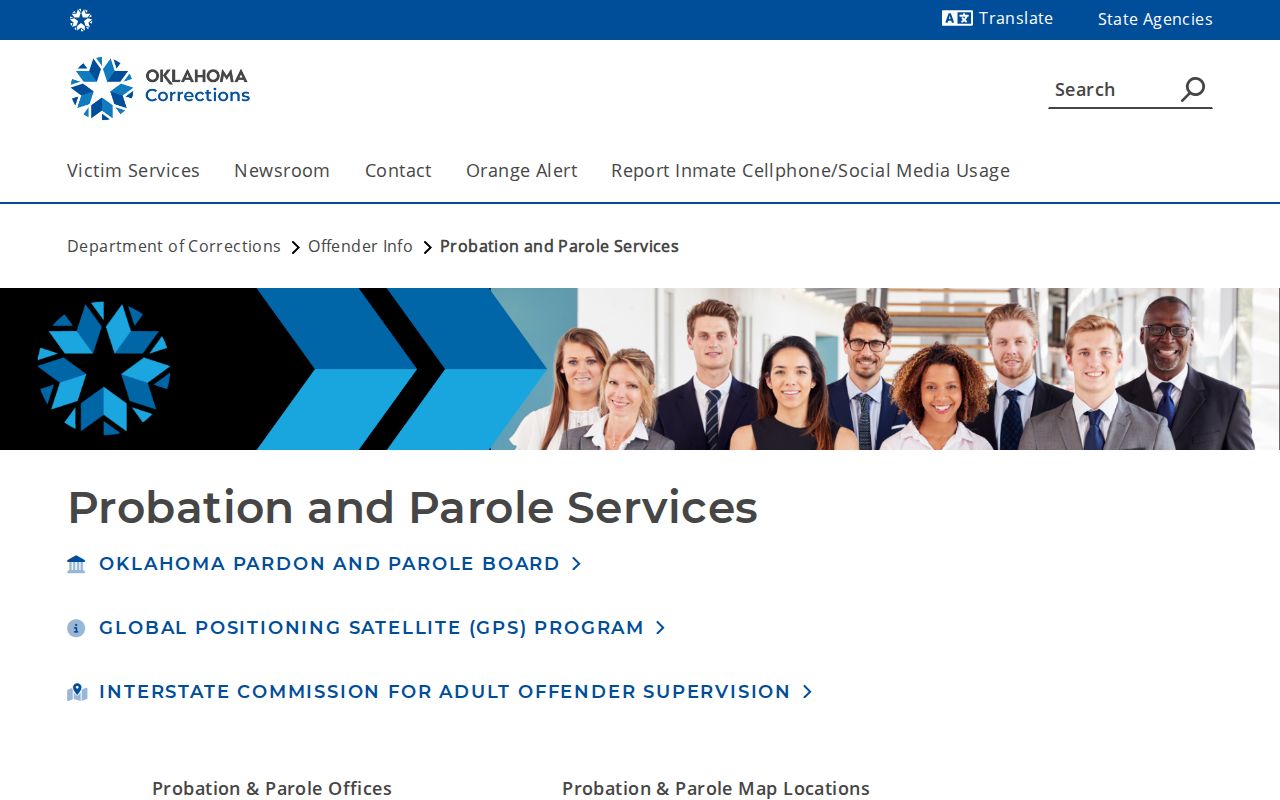
The captured ODOC page anchors the local office to the state agency that administers community supervision, not to OCDC or the Parole Board.
Oklahoma County Parole Hearing Records
The Oklahoma Pardon and Parole Board publishes monthly dockets and result files. Find the DOC number first. Then choose the relevant year and month, search the PDF for that number, and verify the name. Result terms can include a favorable action, denial, pass, deferment, removal, administrative action, or rescission. The actual legend in that month’s document controls.
A docket listing means consideration was scheduled. It is not a release record. A favorable outcome also is not the physical exit time because conditions, legal approvals, a release plan, and ODOC processing can remain. After reading the Board result, check the later ODOC status and VINE event. The state parole framework in 57 O.S. § 332.7 also varies by offense and date. For offenses listed in 21 O.S. § 13.1, the statutory 85 percent floor governs parole consideration.
The Parole Board dockets and results page displays the monthly Oklahoma records used for this check.
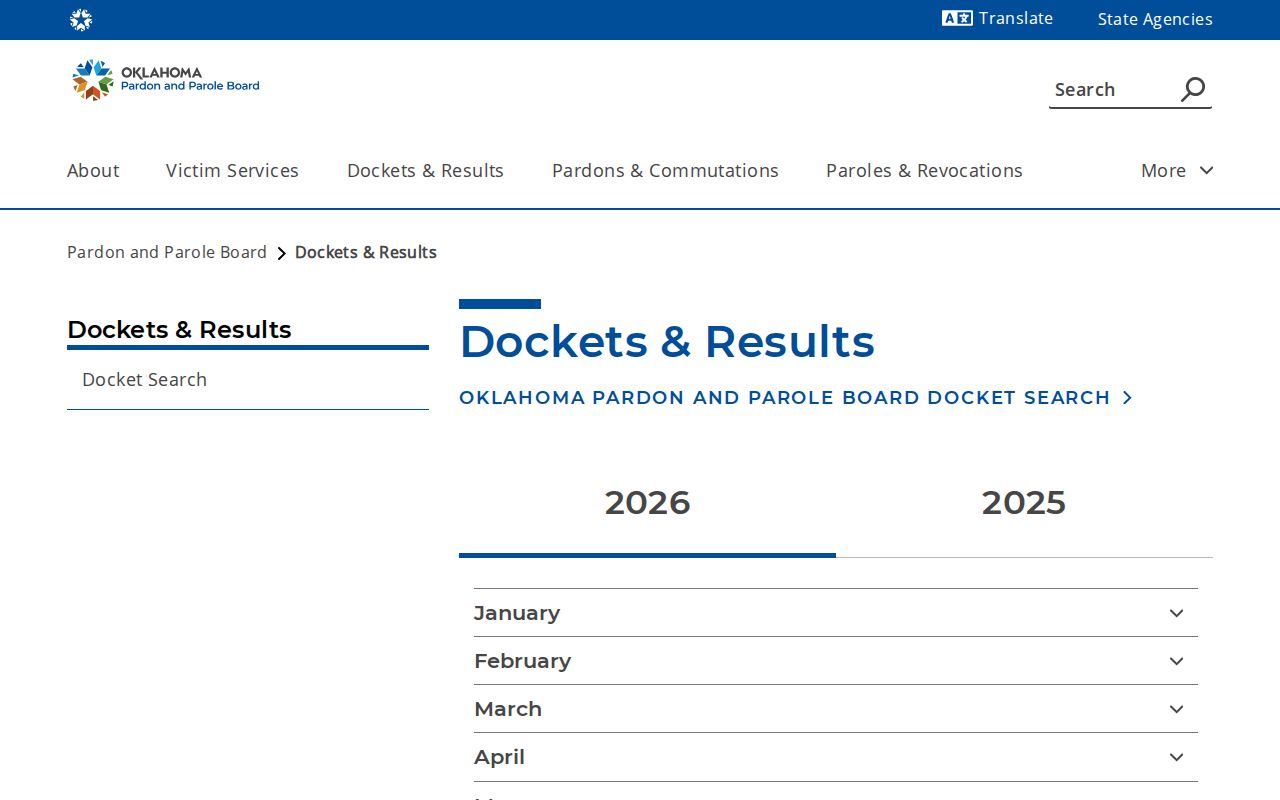
The published month-and-year structure makes the DOC number the reliable bridge between a hearing file and the current ODOC supervision record.
Note: Parole eligibility, a favorable result, and physical release are separate events that must be confirmed in their controlling Oklahoma records.
Clara Waters and Oklahoma County Reentry
Clara Waters Community Corrections Center is an ODOC men’s community corrections site within Oklahoma County. Its fact sheet describes treatment, education, classes, work-related activity, partnerships, and transition programming. That local setting matters when a state record names community corrections or a placement in Oklahoma City. It does not turn Clara Waters into a county probation office.
Community corrections can remain a form of state custody or structured placement. Participation in a transition program does not prove discharge. A person may move to parole, transfer to another facility, continue in community placement, or later discharge under the sentence. The ODOC person record is the place to distinguish those outcomes. Clara Waters also has an Orange Alert code for walkaways or escapes, which are unauthorized absences rather than community releases.
The official Clara Waters fact sheet describes the programs and state-custody setting. When the lookup names Clara Waters, preserve the exact status and date. Contact the facility or ODOC for the current placement, then use the Oklahoma County supervision office only if the updated record shows probation or parole.
Three Oklahoma County Warrant Lanes
Oklahoma County warrant information can refer to three very different processes. OCDC publishes local warrant and bond information, including a warrant-clearing contact. An Oklahoma County probation case can produce an application to revoke or accelerate and a district-court warrant in OSCN. A parole case follows ODOC warrant and revocation policy. A result in one lane should not be restated as proof of a result in another.
| Lane | Controlling source | What to verify |
|---|---|---|
| County warrant or bond matter | OCDC and the issuing court | Case, issuing authority, and whether the warrant was recalled or served |
| Probation violation | OSCN Oklahoma County docket | Application, hearing, court warrant, order, and later disposition |
| Parole absconder or revocation | ODOC policy and supervision record | Agency status, warrant process, revocation action, and custody event |
“Absconder” is an agency status, not a new sentence and not a final finding by itself. The OCDC warrants and bonds page lists its warrant-clearing line, 405-713-1550, but that route does not operate an ODOC absconder search. Orange Alert concerns facility walkaways, including Clara Waters, and should not be used as a list of ordinary probation or parole violations.
Oklahoma County Supervision Changes
Conditions are the rules attached to parole or probation. Their exact terms come from the order, supervision agreement, and current agency instructions. A violation allegation can lead to added controls, an intermediate sanction, a court filing, a warrant, or a revocation process. It does not establish the outcome before the responsible court or agency acts.
OK VINE can report state events such as transfer, escape, apprehension, release, and death. ODOC policy includes incarcerated people and probation or parole offenders in that event system. Still, VINE does not replace separate Parole Board notification. It also does not prove a person’s physical location in Oklahoma County. For a critical mismatch, compare the ODOC status, the court docket, and the agency that owns the event.
Interstate supervision creates another limit. A person may have an Oklahoma sentence while an approved compact places supervision elsewhere. Conversely, a new Oklahoma County jail arrest can interrupt a community status before a state page catches up. Record the update time of every source.
Note: A current supervision label confirms an agency status, not the person’s exact address or uninterrupted presence in Oklahoma County.
Oklahoma County Supervision Discharge
Supervision ends through formal action, not merely because a projected date arrives. For probation, read the Oklahoma County judgment and later entries in the official OSCN docket search for termination, discharge, revocation, or acceleration. For parole, review each ODOC sentence count and the current supervision status. Concurrent and consecutive sentences can leave one obligation active after another has discharged.
A past discharge entry is historical evidence. A no-result is weaker. Names may be misspelled, a public record may be limited, or a sealed case may no longer display ordinary detail. Keep the DOC number and court case number tied to the correct person. If the source records conflict, the court owns its order, ODOC owns the state sentence calculation, and OCDC owns the county jail exit timestamp.
Oklahoma public-record access remains subject to lawful confidentiality. The Oklahoma Open Records Act does not make every supervision note public. Ask for the smallest existing record that answers the status question and permit redaction of protected material.